

Dualità fra bianco e nero, bene e male, bello e brutto. Come la notte e il giorno, sono essenze indispensabili a se stesse che convivono, leggibili in modi diversi, ma speculari.
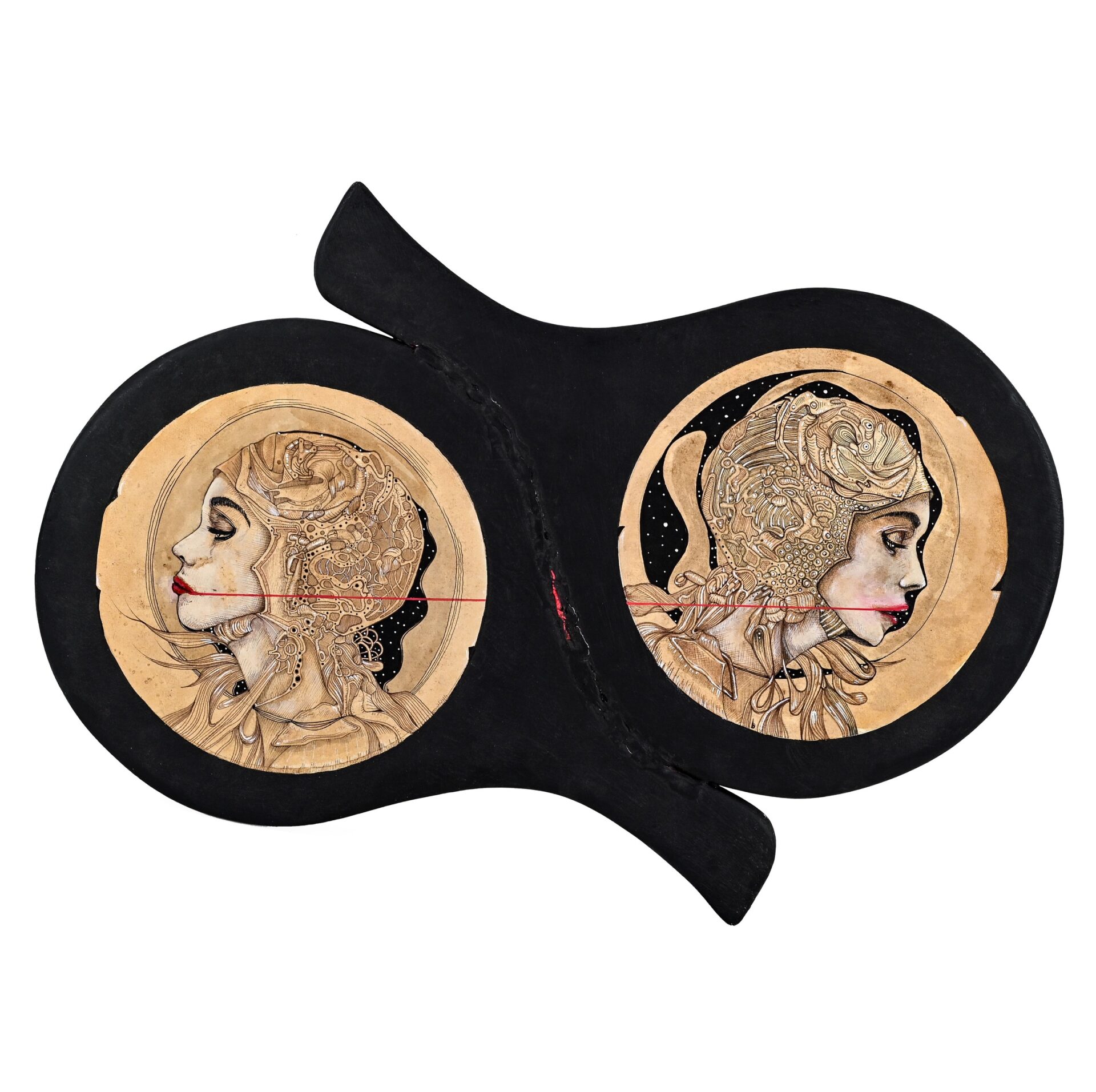
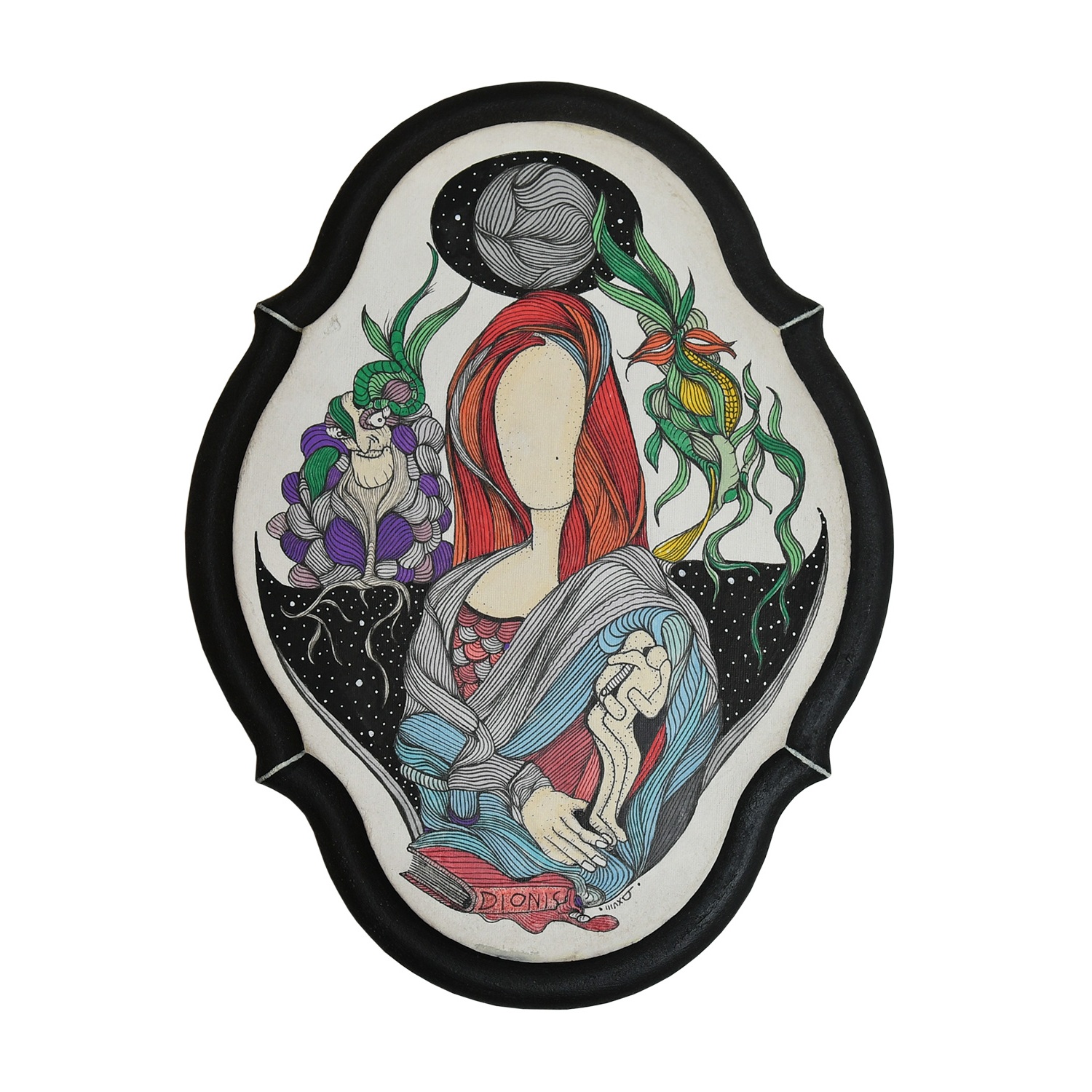
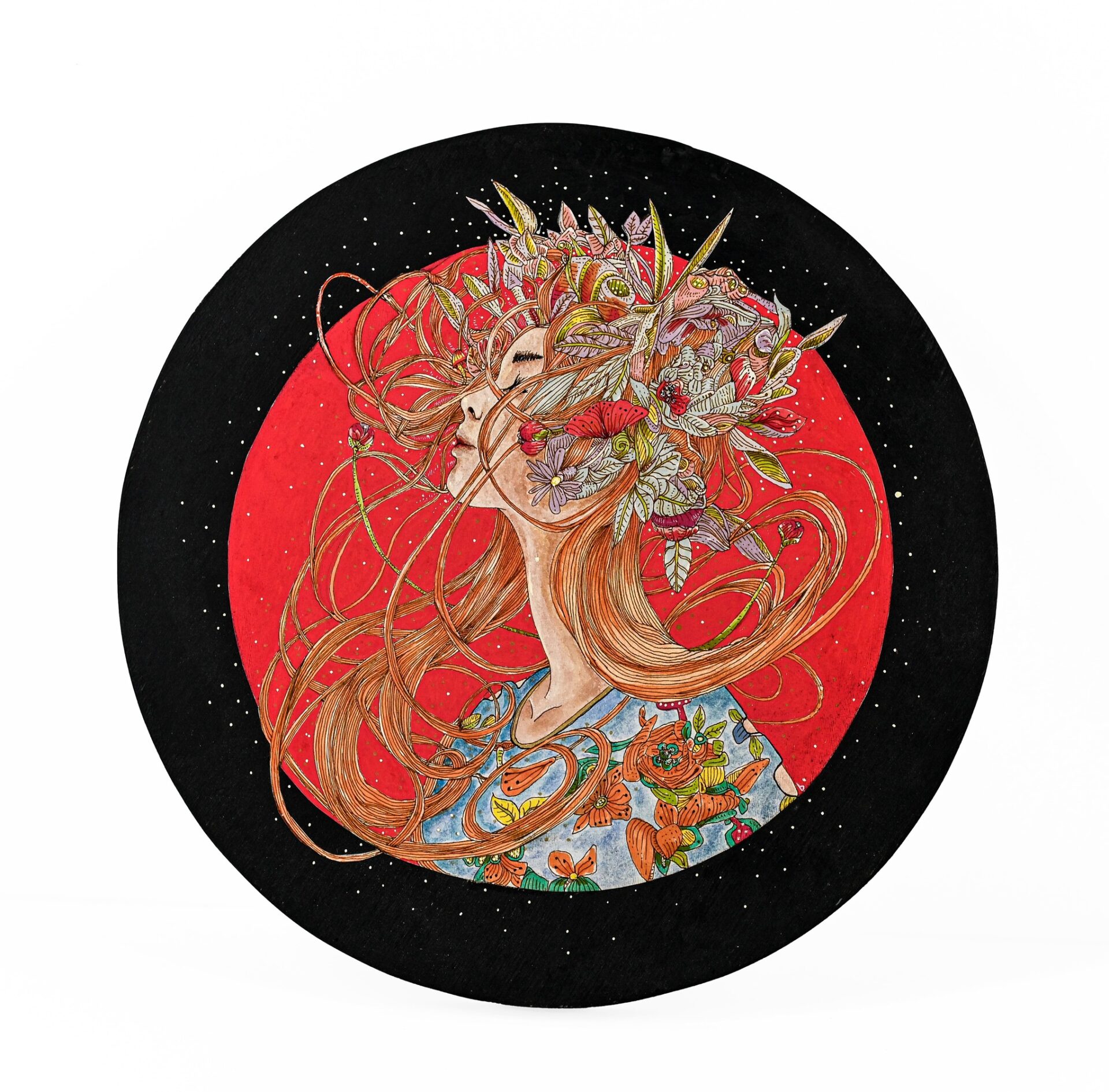
Double Identity, realizzata su racchettoni in legno, richiama lo sguardo a forme che ci ricordano i piccoli specchi da borsetta degli anni ’20. E’ il passato che ritorna ancora per raccontarsi. Qui, l’emblema dello Yin e Yang, la relazione fra ciò che è interiore ed esteriore. Il lato opposto dell’uno e dell’altra che nascondono due facce della stessa medaglia.
Per Brizzo, non si tratta di scegliere, come fossero due strade opposte o disgiunte nella dinamica dello “sliding doors”, ma di accettare il doppio punto di vista. Un filo rosso li unisce, è l’invisibile legame di sangue che incatena due visioni diverse della vita, quelle che lo sguardo non comprende in superficie, ma che si incontrano fra il visibile e l’invisibile, dichiarandosi libere di convivere senza fine.
Materiale e tecnica
Carta pergamena applicata su legno, trattata con caffè, china marrone e biacca.
Dimensioni
L: 50 cm
H: 35 cm
Anno 2022
Pezzo Unico
Realizzato in Italia
Nota sull’artista:
Brizzo, nasce a Copertino (Le)nel 1978, vive a Lecce. Il suo lavoro è nato con un colpo di fulmine: al Liceo, l’incontro con un acquerello astratto di Kandynsky (1913 composizione). Da quel momento èuna scelta di vita; ilprimo impatto della visioneche subito stimola undesiderio: capire il perché. Col tempo, si allontana dall’Arte tradizionale, rompendo colpassato, per istinto di riconoscibilità. Elabora un personale linguaggio figurativo che rimanda ai complessi enigmi metafisici.“Bisogna uscire dalla trappola, evitare di copiare, ma riproporre e ricreare”. L’idea diventail suo primo soggetto su tela ad olio, la riproduzione di una foto ritratto di una bicicletta appoggiata su un ponte, su un canale olandese. Lo attraggono le linee, strutture portanti di quella che non è più l’immagine, ma la percezione mentale che di essa si ha. Non è una riproduzione realistica, ma un uso nuovo di colori, una visione differente. La sua idea d’Arte nasce da un Pessimismo personale, ci ricordaWoody Allen e non si basa su canoni prestabiliti. Ogni cosa è riprodottaconsapevolmente nel suo opposto, diversamente da come è.La maturità artistica è legata ad un periodo retrò fatto di linee che danno forma ai suoi più intimi pensieri.
Segui Fine Aptitude sui canali social per restare sempre aggiornato Facebook, Instagram, Linkedin, Youtube
You may also like…
-
Sun
360,00€ -
XXIV Febbraio
750,00€ -
Dionisio
240,00€
Duality between black and white, good and evil, beautiful and ugly. Like night and day, they are essences indispensable to themselves that coexist, readable in different but specular ways.
Double Identity, made on wooden rackets, draws the eye to shapes that remind us of the small purse mirrors of the 1920s. It is the past that comes back again to tell its story. Here, the emblem of Yin and Yang, the relationship between what is inside and outside. The opposite side of one and the other that hide two sides of the same coin.
For Brizzo, it is not a matter of choosing, as if they were two opposite or disjointed paths in the dynamics of the “sliding doors”, but of accepting the double point of view. A common thread unites them, it is the invisible blood bond that chains two different visions of life, those that the gaze does not understand on the surface, but which meet between the visible and the invisible, declaring themselves free to coexist without end.
Material and technique
Parchment paper applied on wood, treated with coffee, brown ink and white lead.
Dimensions
L: 50cm
H: 35cm
Year 2022
Single piece
Made in Italy
Note about the artist:
Brizzo was born in Copertino (Le) in 1978 and lives in Lecce. His work was born with a stroke of lightning: in high school, the encounter with an abstract watercolor by Kandynsky (1913 composition). From that moment it is a choice of life; the first impact of the vision that immediately stimulates a desire: to understand why. Over time, he moves away from traditional art, breaking with guilt, by instinct for recognisability. He develops a personal figurative language that refers to complex metaphysical enigmas. “We need to get out of the trap, avoid copying, but repropose and recreate”. The idea becomes his first subject on oil canvas, the reproduction of a portrait photo of a bicycle leaning on a bridge, on a Dutch canal. The lines attract him, supporting structures of what is no longer the image, but the mental perception that one has of it. It’s not a realistic reproduction, but a new use of colors, a different vision. His idea of Art comes from a personal Pessimism, Woody Allen reminds us and is not based on pre-established canons. Everything is consciously reproduced in its opposite, differently from how it is. Artistic maturity is linked to a retro period made up of lines that give shape to his most intimate thoughts.
Follow Fine Aptitude on social channels to stay up to date on Facebook, Instagram, Linkedin, Youtube